How top funded institutional crypto startups build trust

I was asked recently how an institutional crypto platform should communicate trust, governance, and compliance without drowning a prospect in it. Good question, so we went and looked.
We tore down five of the top funded institutional players: Fireblocks, Anchorage, Galaxy Digital, Securitize, and Bakkt. Here is what they do, and what it tells you about earning trust from an institution.
Homepages analyzed and captured July 2, 2026. These sites change often, so specifics may shift after publication.
The trust advice you have heard was written for consumers
Robert Cialdini's Influence: The Psychology of Persuasion is the book most people reach for when they talk about why we say yes to anything. A big part of it is how trust and credibility, built through things like social proof and authority, decide whether someone goes along with you. Layer on the usual marketing advice and you get a familiar recipe for a trustworthy website:
- Social proof: testimonials, reviews, star ratings
- A big user count ("join 2 million users")
- Real faces: the founders, the team, the story
- An easy path to sign up
- A bonus or incentive to nudge the decision
That recipe assumes one thing about your buyer, that they are a person spending their own money and deciding fairly quickly. For institutional crypto, none of that is true, and the sites show it.
An institution does not buy like a person
An institutional buyer is a firm. Someone there is deploying other people's money, they answer to a compliance team and an investment committee, and they are never going to click "buy." They run a process. So a good institutional site is not trying to make anyone feel good. It is answering the questions this buyer has to be able to defend to the people they report to.
They borrow trust from names the buyer already respects
Cialdini would call this social proof, but the version that moves a fiduciary is not a five-star review, it is a name they know. Securitize runs a band titled "Trusted by Leading Institutions": BlackRock, Apollo, KKR, Hamilton Lane, Morgan Stanley, BNY. Anchorage labels a row "Investors" and shows Goldman, a16z, KKR, GIC. Fireblocks does not even use a label, it just puts up the banks.

And when Anchorage runs quotes, they are named executives from BlackRock and Grayscale with company logos, not a customer with a first name and a smile. Notice what is nearly absent across all five: the single consumer testimonial. For this buyer, a case study of how a peer firm actually runs the product beats a quote, because it answers "will this work for an operation like mine."
They prove scale and safety, not popularity
Every consumer app leads with how many people use it. None of these do. They lead with how much moves through them. Fireblocks: $10 trillion in transactions, 550 million wallets secured. Galaxy: $9 billion on platform, 1,600+ institutional counterparties. Securitize: $4 billion tokenized.
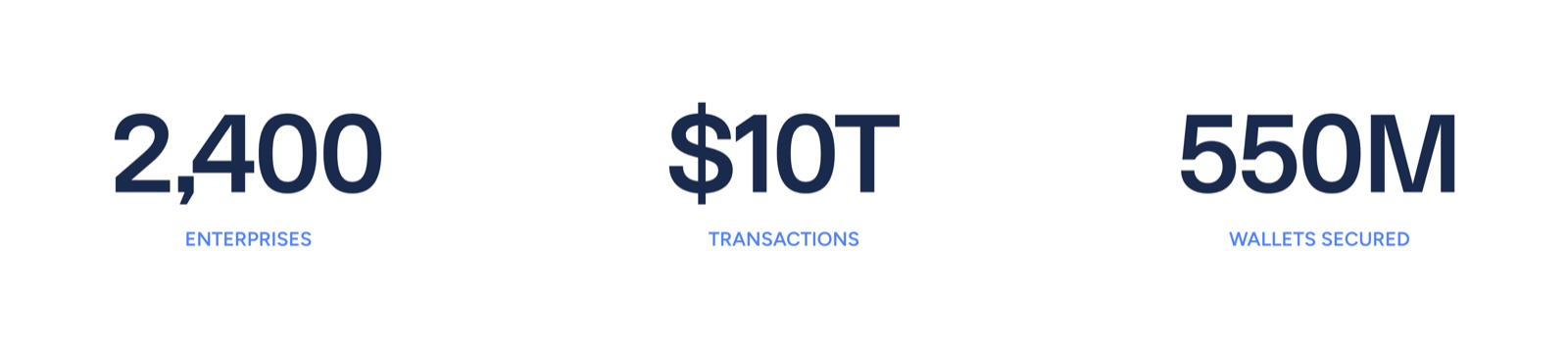
A fiduciary does not care that a lot of people signed up. They care that a lot of value already runs through you without breaking, because their downside is not a bad afternoon, it is having to answer for a loss.
They lead with compliance instead of hiding it
This is the one consumer sites bury and institutional sites put up front, and the interesting part is that it costs nothing to invent. They are not making up a trust mechanism. They point at rules that already exist and show they follow them, with a badge to prove it. Anchorage's whole identity is "the first federally chartered crypto bank." Bakkt puts "Audited" among its top values. Securitize turns its SEC transfer-agent status and FINRA and SIPC membership into the loudest visual on the page.
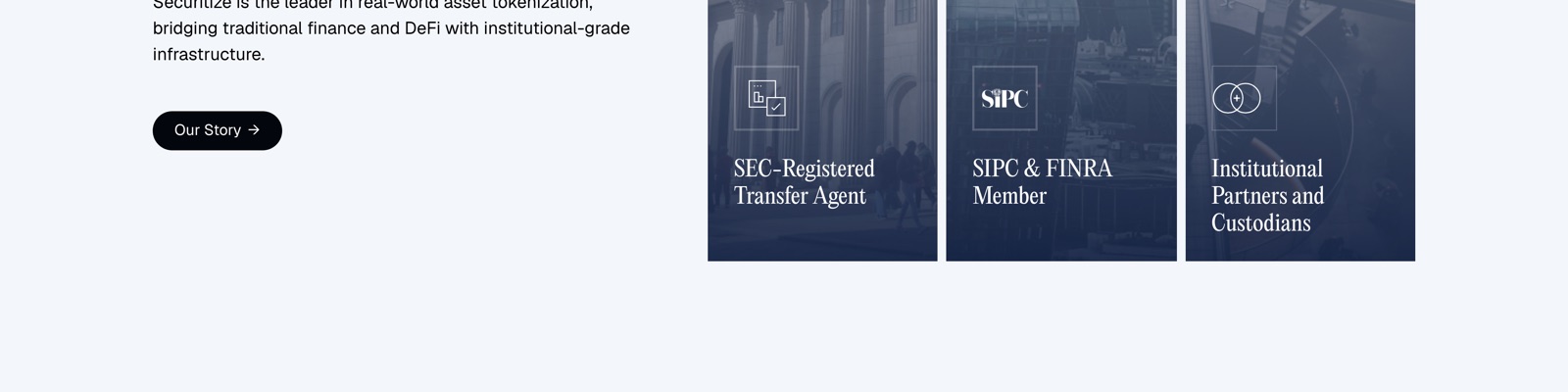
For a consumer a license number is noise. For a compliance officer it is the first thing that has to be true. Compliance here is a headline, not a footnote, and it works precisely because the credibility is borrowed from the regulator rather than claimed by the company.
One honest note: consumer crypto apps lean on compliance more than a normal consumer product would, because crypto carries a trust deficit everywhere. So the real difference is not whether a company uses compliance to build trust, but whether it wears compliance as its identity or tucks it into the footer.
The site matches how institutions actually buy
The consumer playbook says strip out every click between the visitor and signup. These sites do the opposite. That can look like friction, but it is really the site matching how the sale happens. An institution buys through a demo, a security review, and a committee, so the honest next step is a conversation, not a checkout. Fireblocks says "Talk to sales." Bakkt says "Book Your Consult." Anchorage says "Get in touch" and gates the form by assets under management.
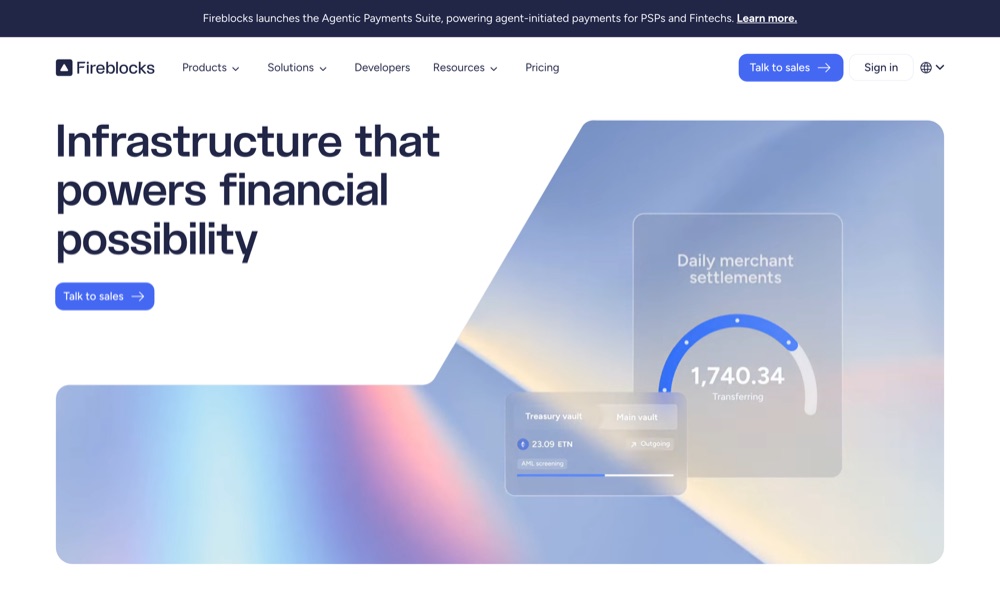
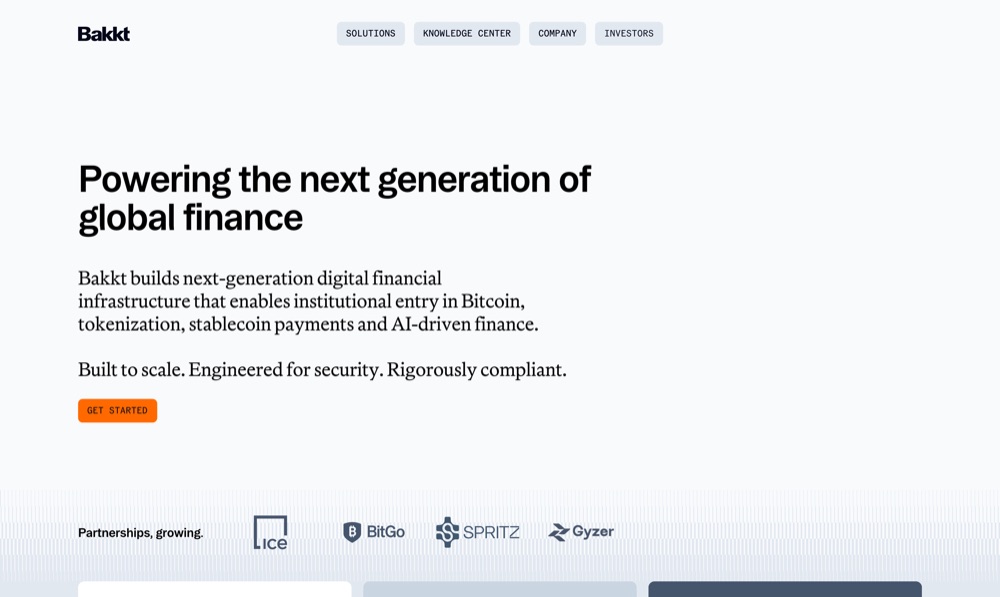
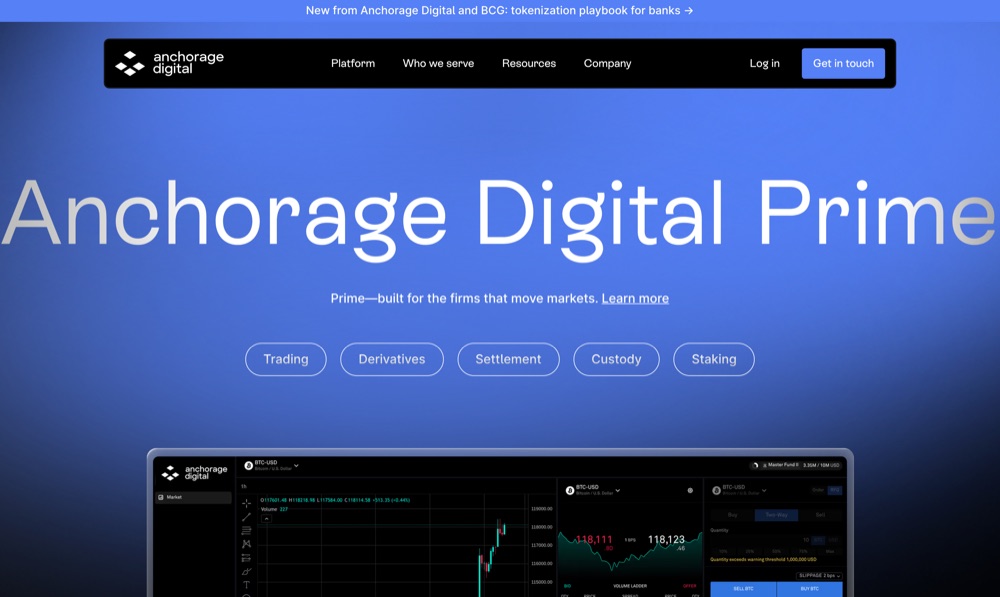
Offering one-click signup to a buyer who needs three months of diligence would read as not understanding them. Matching your call to action to the real buying process is itself a signal that you get how they operate.
What they leave off the page on purpose
No sign-up bonuses, no "easiest way to," no urgency banners, and no founder faces on any of the five homepages. It is tempting to call that restraint, but it is really calibration. Those moves answer a consumer's questions, and using them on an institutional buyer signals that you think they buy like a consumer. Even the design says it: these sites skew dark and quiet, with serif or grotesque type carrying the gravitas, Galaxy practically reads like a research publication, where consumer crypto is bright, loud, and app-like.
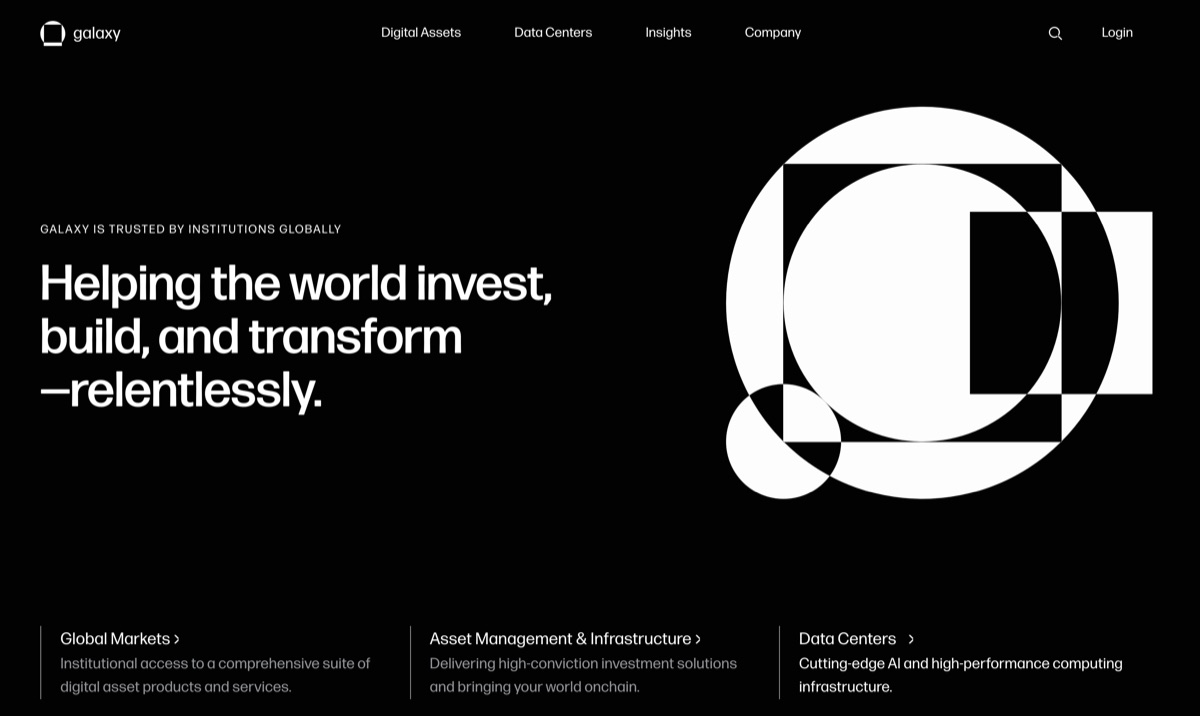

The absence is deliberate. They know which questions not to answer.
It all comes back to knowing your buyer
None of this is a trick bolted onto a website. All five moves come from the same place. These companies know exactly who they are trying to earn trust from, and they answer that buyer's real questions, in the form that buyer finds credible, before the buyer has to ask.
You do not earn institutional trust by stacking more trust signals. You earn it by understanding your buyer well enough to show them what they came to find.
How to use this if you sell to institutions
The first move is not to copy the list above. It is to be honest about who your buyer actually is. Some "institutional" buyers behave a lot like consumers, and if yours does, a testimonial and an easy signup might be exactly right.
But if your buyer is deploying other people's money, needs budget sign-off, and answers to a committee, then their questions are the ones these five answer:
- Who reputable already trusts you
- How much you have safely handled
- Whether you are compliant, and can prove it
- What the real next step is
Start there, then borrow what fits.
Institutional trust only runs one way
There is one more pattern worth calling out. Consumer crypto sites borrow institutional language all the time. Coinbase, a retail signup page offering a $2,000 bonus, still puts "trusted by institutions and government" right on the homepage. Kraken reaches the same direction, billing itself as "infrastructure trusted by global leaders" and stacking an institutional tier onto a consumer site. Sounding institutional makes a consumer brand look more serious.
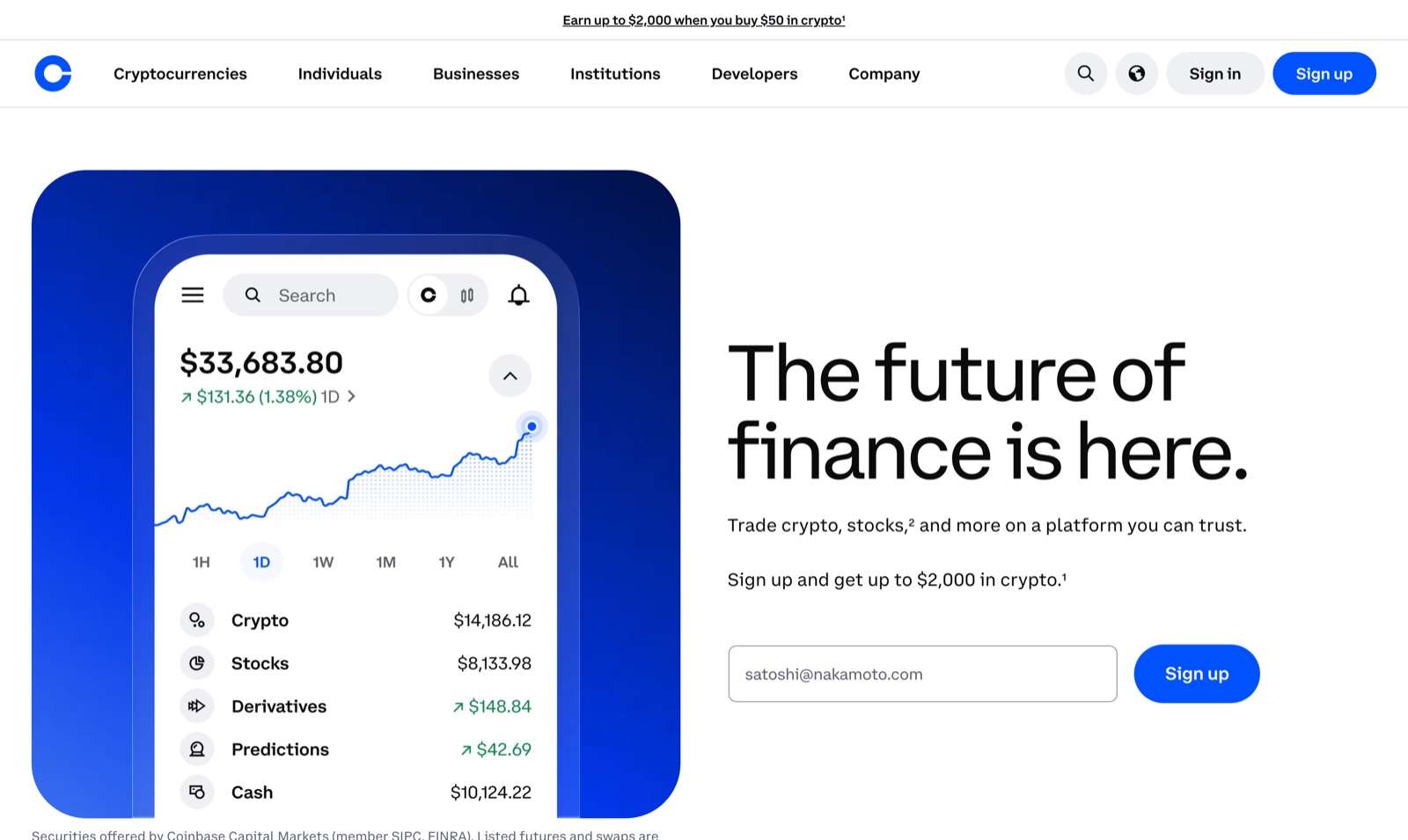
It never runs in reverse. None of the five institutional sites we looked at used a testimonial, a bonus, or a "Get started" CTA.
That is the real reason this is worth getting right: institutional trust is harder to earn, and harder to fake.
Stay Connected